13.4.13

This Isn't Sorcery, This Is Torture: Kill Baby, Kill (1966)

There may be nothing worse in regards to film viewing then committing to a movie that is almost good, but in the end falls short and proves to be absolutely average.  While it may be a reactionary element on my part to the particular stylings of filmmakers like Dario Argento, Jean Rollin and in the case of Kill Baby, Kill director Mario Bava I feel as though the film in question is almost on tap to something excellent but manages to be to preoccupied with narrative closure and normalcy to commit to its zany direction.  I am also aware that I am watching this film with dubbing, which can prove grating in the case of a film that is not necessarily aided by absurdly terrible translations and delivery.  Kill Baby, Kill is a solid film and it has many shining moments, particularly a handful of experimental shots that would suggest a brilliant idea under the surface of vain concerns for attractive people with paranormal problems.  I will admit openly that I am quite unaware of Bava's process as a filmmaker, but the film seriously wreaks of being tampered with, in so much as it has some rather jarring and enjoyable breaks form linear narrative, only to continually resituate itself within the traditional filmic structure, most times with no explanation as to why.  It is one thing for me to engage with a film that purposefully avoids providing characters with names, but it is entirely another matter when I am rather certain that I am being told characters names repeatedly, but have little memory of what they might be scenes later.  Hell, I recently went on a tequila fueled night of Spanish films and undertook watching a Santo film only to be disappointed to discover that it had no subtitles, nor did it possess dubbing.  That being said, I continued to watch the film and managed to glean a plot to some degree, although to be fair it could have just been some elaborate fever dream brought on by the aforementioned tequila.  I offer this aside only to say this about Kill Baby, Kill, I thoroughly enjoyed it as a film and understand that many of its faults are indicative of its era and technological restraints, but there is absolutely nothing more frustrating than seeing moments of genius sandwiched in the middle of a subpar filmmaking.  I would equate it to placing delicious savory brie in the middle of dollar store slices of bread, if that is your course of action it is better just to eat the cheese on its own, much like this would have been a far better film it were just a set of experimental flairs detached from an attempt at cohesive narrative.


I will attempt to hash out some degree of plot from a film that is surprisingly assured that it has a direct plot.  Viewers are introduced to some dark decaying Victorian world in which a woman appears to be nonsensically running about a mansion, only to catch sight of an incredibly sharp spike on a gate.  Upon seeing this she jumps to her death, impaling herself.  This action leads to the county coroner arriving, one Dr. Eswai (Giacomo Rossi-Stuart), only to discover that the town is incredibly unreceptive to his presence, existing instead in an outdated frame of mind that values sorcery and witchcraft over any degree of scientific truth.  This situation makes it insanely difficult for Eswai to get information or make a case for what he assumes to be murders.  As his movement through the area increases he becomes aware of many inexplicable deaths, mostly women, who lose large amounts of blood in the process.  The supernatural activities of the town, Eswai discovers are enacted to counter the demonic spells of Baroness Graps (Giovanna Galletti).  At this point, Eswai becomes incredibly confused as to what the truth of the matter is as it relates to the village, finding no aid when navigating between talismans and scientific truth, yet as more of his friends and trusted colleagues die, Eswai realizes that time is very much lacking and confronts Graps, only to discover that she has enacted such spells as a form of retribution against the town whose drunken oversights resulted in the death of her daughter, who was trampled by horses and slowly bled to death.  Graps believes that her daughters painful death is now the onus of the entire village, create a cycle of death as a means to assure revenge. Yet, Graps is also baffled when she realizes that her daughters spirit also navigates the spaces of the town exacting her own revenge, masked in eerie playfulness.  Fortunately, Eswai realizes the complexities of the situation at the last possible moment and saves his love interest while also assuring the destruction of Graps, although at the hands of another woman whose story is also seemingly important.

Cyclicality in film is not a terrible thing, in fact, it is a necessity in time travel films, and work quite nicely in the recent Men in Black III, however, it can be a bit frustrating when a film wants to offer this great non-linear focus on a cycle of issues, only to go about it in a terribly straightforward manner.  This, again, is my problem with Kill Baby, Kill, it is a narrative of a straight line, whose moments of experimentation seem like hiccups on a seismology reading.  The reminder that a good being is navigating the filmic space results in a narrative where sparks of zeal and camerawork that move through the environment as though they were their own character are ultimately lost, because they, aside from looking stellar, seem to have little affect on the narrative.  Earlier today, I listened to some of a podcasts from the excellent show Filmspotting, and they were making a less harsh criticism of Rami's initial Evil Dead film, suggesting that his use of bizarre camera work occasionally draws in viewers about their relationship with a horror occurring, particularly question within what sort of temporal and spatial world a paranormal narrative can exist.  Again think of the ways the Paranormal Activity franchise managed to challenge how viewers understand a linear horror film narrative, I know I am amongst a minor group of defenders for the films, but they really did revitalize how horror exists, and have for the worst created a set of offsprings that seem to betray the original, much in the ways that Kill Baby, Kill does with non-linear narrative.  Bava's work seems so intent on being surrealistic that when it does have the moments of such a degree of insanity they seem to be secondary to a lackluster plot.  I know that this film predates the original The Wicker Man by quite a few years, but it is clear that the sort of paranormal space created within that latter, is realized from the opening moments of the film, as opposed to be something that comes and goes at the whim of narrative normalcy.

Key Scene:  P.O.V swingset shot.

This is not a terrible film, but it is really damn frustrating.  I want it to be something it is not and I realize much of this is my own problem. With that in mind watch it instantly on Netflix and feel free to tell me that I am completely misreading the film, it is quite possibly the truth.

12.4.13

I Disappear, And If You're Smart, That Scares You: Jack Reacher (2012)

I am a big fan of films that are decidedly ambiguous in their moral commentary, it is not necessary, in my worldview that one must be provided answers to all life's large questions through a deeply engaging film, in fact, this is one of the many reasons I am enjoying the string of work coming from Paul Thomas Anderson.  However, with that in mind I am completely bothered when a film attempts to embrace some degree of moral ambiguity, only to make it blatantly clear that it has created a fine line between right and wrong.  The recent adaptation of Jack Reacher, from the novels of Lee Child, seem to exist in this problematic realm.  Before being critical I want to note two things.  First, I understand that this is an adaptation, therefore, it will be impossible to create a perfect reflection of any ideal character or subject study from the text, because you will invariably be required to cut elements out.  Second, aside from a few moments of less than stellar acting on the part of Cruise and a few of the other performers, this is a solidly composed and well-delivered film from a formalist frame of reference.  These elements help to explain why it got such surprising reviews even from people who found themselves to have preconceived notions about its assumed terrible nature.  I am bothered though because the version of the screenplay that does emerge on the screen is something of an absurdity, because it manages to paint an image of Jack Reacher, an ex-military police officer, as being something far beyond the morally straight, in his quest for truth, even if it means a bit of deception along the way.  Unfortunately, whatever version of the script this idea emerged never really came to fruition and instead viewers are provided with a character, and even villains who are supposed to navigate a grey area of moral values, only to end up reaffirming them, something I will elaborate on a bit later, because while I am quite critical of its implementation, I am also aware that this action film is a few strides ahead of its contemporaries, almost moving into the space of the superhero film.  Of course, the biggest travesty of this film is to include both Robert Duvall and Werner Herzog in the cast and only provide them with what probably amounts to a collective of fifteen minutes of screen time.


Jack Reacher begins with a tragic and unexplained shooting that leaves five victims dead, leading to a quick investigation on the part of the police force that pins the murders on ex-Army sniper (Joseph Sikora) who is immediately put into custody and severely beaten by fellow convicts who see him as a ruthless and psychotic killer, however, before this occurrence he asks for the help of man named Jack Reacher (Tom Cruise) and before the attorneys can even attempt to hunt down the man, Reacher emerges from nothingness to involve himself in the case.  Reacher is a decidedly enigmatic individual, using only cash transactions and a completely nomadic lifestyle to avoid detection of any degree, as a clever aside he even changes his name when meeting people, always choosing a Yankees second baseman as his moniker.  However, Reachers arrival does not solve the case by any means and the district attorney and his young gun aid are set on putting Barr on death row, although the D.A.'s daughter Helen (Rosamund Pike) seems to insist that him having a fair trial is of the upmost importance, even if he is assured to be guilty.  Reacher seems solely concerned with obtaining a factual reason for each killing, believing that Barr's previous indiscretions as an ex-sniper void him of criticism and that there is clearly another layer of motive.  All the while, Reacher begins navigating the crime world and discovers that there are crime syndicates out to get a particular building company, and that Barr was likely framed by this syndicate led by The Zec (Werner Herzog) a grotesque giant of a man whose will to survive led him to chewing off his own fingers and completely losing any sense of relation to the world.  Reachers continual investigation leads him to also discover that the attorneys supposedly in charge of helping individuals are likely tied to the syndicate, putting Helen in an incredibly tense situation as her choices to delve deeper into the investigation result in her being a subject of scrutiny by her father and his aide.  However, Reacher knows that by finding one person to affirm Barr's character, he will be able to make it to the killers, finding this in Cash (Robert Duvall) a cantankerous old man whose work at a shooting rage allowed him to come into contact with Barr, as well as another man who Reacher suspects to be the real killer.  Of course, this is not the end of the film there is a large, excessive shootout leading to the death of nearly everyone involved, with the exception of the clearly delineated good guys.


I mention that the film ends with the good guys winning, because it spends so much of the film suggesting that everyone is capable of morally questionable decisions when in the appropriate setting.  For example, it is not necessarily within Helen's moral goodwill to invade the victims of the shootings homes, yet when told that it will help her case she does so with fervor, much to the anger of a father, who clearly seems intent on blaming Barr for his daughters death, completely throwing innocence out the window.  Even the attorneys on the case seem indifferent to morals, in fact, this becomes very clear by the end of the film, but as Helen makes clear, her father only chooses to pick cases he knows he can win, because such a reputation allows him to have sway over criminals even if they are innocent.  Reacher himself also navigates some questionable ethical territory when he steals multiple cars and creates an overblown police chase an event that causes a ton of damage and fails in his ultimate goal of leading the cops directly to the real criminals.  Furthermore, once his car is immovable he is afforded aid by a group of citizens who see his fleeing from a ton of cops as something to embrace, one man even offering him his hat to allow for a disguise as he hops on the bus and is driven away.  People within the context of this film seem uncertain about what role authority plays, particularly since it seems subject to its own levels of corruption.  One of the more intriguing conversations in the film centers around Reacher and Cash considering the threat of gun violence on the livelihood of his shooting range.  Reacher knows that he only need to mention that Barr was a frequent visitor to his range to get a paranoid soccer mom to get the place shutdown.  It is a decidedly valid threat and causes the film to exist in another layer of gun rights commentary, however, even when one assumes this to be an underlying theme it too is undermined and inconsistently discussed throughout.  Also, The Zec, proves to be a less than stellar character, whose willingness to but his body into pain in the name of survival has its own degree of intrigue, and his admittance to having no clue about his real identity speaks volumes to his complexity, but he is killed moments later, for what is a rather inexplicable reason.  Nothing is fully fleshed out in the moral world of the film and it is frustrating, thankfully, its showiness makes that somewhat bearable.

Key Scene:  The car chase was quite enjoyable, it had been sometime since I had seen one with any degree of excellent execution, aside from the obvious ones in a certain Ryan Gosling flick.

This was a free theater screening for me and made it somewhat less terrible I imagine, although I can say that it is worth renting, if only as an example of how not to approach moralism in film.

10.4.13

Sometimes Things Need To Be Reset: The Comedy (2012)

When I warn people about films being abrasive and controversial to the point of having moments that are downright unwatchable, it is usually a result of some sort of graphic depiction of sexual violence, as is the case with almost all of Salo; Or the 120 Days of Sodom, or it is due to their sheer disregard for political correctness in the name of a larger statement on art and middle American values, as certainly occurs within Harmony Korine's Gummo.  Yet what one receives when viewing last years The Comedy, a film starring Tim Heidecker of Tim and Eric fame, is a film that is equally abrasive in its visual offerings, as well as main character, without the sort of artistic detachment or political statements of the aforementioned films, and before you continue reading this post, I want to make it absolutely clear that my noting of this films off-putting and disconcerting elements are not a sign of a critique in any way on my part, in fact, I absolutely become mesmerized with The Comedy.  Of course, the title is decidedly deceptive and will surely prove to be an unwanted encounter for many people on Netflix who see the title and expect an outright hilarious film.  Instead, under the brilliant directorial vision of Rick Alverson, viewers are provided with an indie work that throws caution to the wind in deconstructing exactly how disconnected a privileged white yuppie finds themselves, particularly in the face of real world oppression and suffering.  The title is more than apt for a film that is rather sparse on comedic moments, although some of Heidecker's improvisation is glorious, in that it takes comedy in much the same sense that Shakespeare did, allowing it to simply depict the absurdity of certain detached groups existences, complete with all their frivolous absurdity.  Of course, The Comedy clearly lands on the side of condemnation, but that is not to say that it is not aware of the possibility of realization, especially within regards to the main character, whose movement between a world of PBR-fueled awkward sexual encounters to a very real understanding of the facts of death, allow for a narrative of the most minor of advances towards maturity, yet in the way of this biting film, viewers are left asking the question of whether or not such an inconsequential change allows for a avenue of forgiveness for the truly degrading behavior enacted upon others by the privileged bodies that occupy the filmic space.


The Comedy focuses nearly entirely on the experiences of Swanson (Tim Heidecker) a well-to-do kid whose money seems to be very much tied to the financial success of an ailing father.  His wealth allows him to circle himself with other trust fund kids who spend their days guzzling a bizarre combination PBR and high-end bourbon, while spouting off terrible sex based jokes, or diatribe against the system that seems to support those with little.  Swanson in particular, seems set on making persons exist within an awkward state as a means to find some sort of validation for his malaise fueled existence, whether this involves invading the work of immigrant landscapers, or suggesting that Adolf Hitler might not have been a terrible guy had his ideas properly panned out.  It is clear that even through all this, Swanson possesses a crippling sense of loneliness, often exiling himself to trips on his boat, or going to an "urban" club by himself in search of sex, with persons of a particular racial background.  It never appears that Swanson has any direction to his actions, at one point taking a job as a dishwasher, simply because he happens to be in the area at the moment and applies for the position, much to the confusion of the employer.  It is not until he pays a cab driver an absurd amount of money simply to drive his cab that things become problematic, especially when he refuses to respect the drivers request of calm and normal driving when he makes cat calls at a girl he passes.  This less than close run in with trouble seems to do little to change Swanson, in fact, when he goes out with a waitress on his boat, he sits curiously indifferent when after taking a combination of drugs and alcohol she begins having convulsions.  The closing scenes of the film involve Swanson apparently going on a biking purge, only to follow this by more absurd drinking and viewing of old photographs and porn with his buddies.  Yet,  the closing moments of the film show Swanson playing at the beach, happily welcoming a young boy into a game of innocent splashing, suggesting a longing for childhood, although his simplistic movement through the world certainly implies that this desire is already a reality.


The beauty of the film The Comedy is that it manages to use the genre of pretentious hipster mumblecorp (in this case negative, although they can be good) film to completely reject the sort of disillusion relating to the struggles of rich white kids trying to justify their lives.  This can be horribly delivered and fall short as happens in The Pleasure of Being Robbed, or work when the conventions are undercut in the closing sequences of Entrance.  The Comedy is decidedly on the side of undercutting, but there is no degree of suggestion that this could be redemptive, the PBR-infused inquiries into the questions of life that do indeed exist in so many of these films come crashing down when Swanson uses such moments to push people away from one another, most notably himself, and viewing this occur within The Comedy made me realize that it often occurs in a variety of mumblecorp films through the "look how much smarter" I am moments, again Heidecker just blows it absolutely out of proportion.  Similarly these films often take for granted the characters abilities to move through their landscapes, even if completely desolate, at least this is very much the case for Swanson and his other pals, who use cabs unapologetically, and demand that the cab drivers provide them with their every request, or they will flat out refuse to tip them as a result.  It is an element of the "struggling yuppie" that they often ignore their ability to move freely away from their problems, or better yet mask them with drugs and booze, hell, Swanson's boat is the ultimate form of excessive escapism.  Another tragedy lies in the characters of such films working in dead end jobs while assumedly aspiring to do something else, with little gratitude for the value of employment, particularly in the abysmal economy wherein many of these films were produce.  Swanson, again, takes a job just for the hell of it, never really considering that the work could mean the livelihood to another individual.  Of course, the most intense and baffling scene occurs in a church and sort of proves the centrifuge for the downfall Swanson experiences in the second half of the film.

Key Scene:  The shuffle sequence in the church will have you in awe, I felt my mouth dropping in confusion and awe, both moved and disturbed simultaneously.

This is a recent addition to Netflix Watch Instant and should be viewed before it disappears for one reason or another.

9.4.13

Experiments In Film: Fires In The Mirror (1993)

Dealing with a narrative that pits perhaps two of the most oppressed minorities in history against one another in the face of an inexplicable death and subsequently blaming for its occurrence is a nearly impossible thing to put into visual form, considering that it requires a person to acknowledge the multiple voices and interactions and engagements that surround its most heightened moments, not to mention the seemingly irrelevant moments that, nonetheless, factor heavily into the rhetoric surrounding an event well before its initial inception.  All of this is damn near impossible to do with success, and it is certainly only worsened when one attempts to perform all of these identities on their own.  However, for a considerable portion of the early nineties, Anna Deavere Smith found herself attacking issues of race riots, specifically looking at a problematic and fiery riot which occurred in Crown Heights in 1991 following death of a young black boy and a later a young Hassidic Jewish man, in what was allegedly retaliation agains the elderly Jewish man who ran the boy over.  Of course, while much of the film, although to be more accurate it is a video recording of a one person show Smith had put on, seems intent on considering the odds and angers between Jewish and African-American groups uncomfortably navigating the same condensed and oppressive spaces, it is certainly not the only element of the ideology being spouted and countered throughout the film.  Smith constantly moves between race, gender and identity to look at the ways in which political leaders such as Al Sharpton affected the movement, as well as the way in which theories about race and religion undermine the possibility of successfully understanding the misunderstanding that led to unnecessary bloodshed and an equally frustrating riot in a urban subdivision of New York.  Fires in the Mirror manages to be about as bias as possible in its consideration of who really suffers loss in such a situation, while making bold and expansive considerations of the way identity changes and molds itself to fit a moment or idea, much as Smith does within the context of the one person show.

The film seems to embrace Judith Butler's notion of performing gender as being just that, a performance.  Particularly, Butler seemed to suggest that a person could use and remove certain gendered signifiers to help those they interact with better understand their gender in the moment, although even this is rather fluid and subject to change in the matter of seconds.  Smith takes this idea and more than runs with it within Fires in the Mirror, in once scene playing a white statistician, while in another Angela Davis, she even embodies the unconventional role of a Australian Hassidic Jew, all the while creating a narrative of the possible layers to the death of two young people and the dueling riots of two groups who felt they had been victims of an injustice.  One could certainly argue that Smith wants to extend Butler's notion of the performative to add elements of race, class, nationality and even more unusual religious identity, reminding viewers that in most instances common ideals win out and rationality emerges, however, when one finds trouble navigating the liminal space between respect and understanding things can truly become complicated and the moments hesitation when commenting on a disruptive topic can prove fatal, it certainly did in the case of Crown Heights circa 1991.  Of course if this were entirely dramatization one would be hesitant to embrace its masterful quality.  However, Smith does not simply adapt her own play by gleaning from accounts to create an ideal fictional appropriation, instead; she actually embodies the persons she interviewed, going so far as to use their exact words in her play and nothing more.  This seems to occur most successfully with the maternal figures, however, her portrayals of elderly Jewish rabbis and reluctant eyewitnesses are equally powerful and no less captivating  Finally, if this direct approach is not enough, the viewers is also provided with the repetition of images and film from the riots affirming its reality, even if they are watching a beautifully executed simulacrum of the original events.  In the films closing shot, prior to a montage of images, one cannot help but understand that at the root of all the political rage and racial hatred, very real loss occurred and to not give that a voice, even through a simple shot at close would be to do a terrible injustice.

This is a gripping and masterful work and I am ashamed to have gone this long without seeing it, and cannot urge you enough to watch it immediately, to do so, or to find out more information about Anna Deavere Smith, click on either of the images below:


8.4.13

It's A Call For Help Intended As A Private Communique: Zodiac (2007)

In the past few years Mad Men has been given a ton of praise for, amongst other things, its incredible ability to capture the imagery, culture and general state of mind of the era it is depicting, both in the decaying stature of white, male privilege as well as the ever so faint heartbeat of the change that is moments from emerging in America.  David Fincher's criminally underrated Zodiac is certainly a film with a similar attachment to such a style, all be it set a decade later and over a much longer period of time, transition seamlessly and poetically, making even his clear moments of large periods of transition seem effortless and completely within the framework of the lengthy film.  As of late, I find myself bemoaning everything that is associated with Fincher's Fight Club, mostly for its following and fans who believe it to be the sole moment of revolutionary cinema.  I am certainly behind the quality of Fight Club as a film, but much like the blind supporters of the beatniks it has its rather obvious flaws, ones that seem to emerge with age.  Of course, this is not about what will, undoubtedly, prove to be the dynamic directors most well-remembered tim but is, instead; about what might tragically be his most overlooked.  Zodiac is a meticulously designed and deceptively straightforward film, that manages to take one of America's most baffling serial killer cases and turn it into a gripping human drama that is both narratively tight and cinematically profound.  This, of course, is of little surprise, after all, we are talking about a filmmaker who always proves consistent, even when doing something completely out of his comfort zone with The Curious Case of Benjamin Button.  Even his Netflix series House of Cards stands shoulders above most things being circulated in theaters at this very moment.  Much as it seems to be the case with so many of Fincher's films Zodiac demands that its viewers be both fully invested in their characters day to day activities, while also understanding that since they engage with an inherently terrible system that all persons are susceptible to failure, greed and ultimate a brutal downfall, and that doing the right thing is rarely reward, if not outright punished.


Zodiac, as should be little surprise, follows the emergence and tracking down of the infamous Zodiac Killer, who spent a considerable portion of the seventies randomly killing individuals in, and around, the San Francisco Bay Area.  Of course, as is the case with most crime thrillers the killer is only the secondary subject, Zodiac instead focuses on people attempting to solve the puzzle and rather literal enigma that is the killer who called himself Zodiac.  Firstly, there is the established, all be it, cynical  news reporter Paul Avery (Robert Downey Jr.) who sees this case as a means to blast his career to the next level, pulling no punches in his attempts to track down everything he can regarding the case.  Within the same news agency is Robert Graysmith (Jake Gyllenhaal) whose life as a cartoonist takes a sharp turn when he decides to decode the letter from the Zodiac, an act that leads him to become irreversibly obsessed with the case, skipping work and eventually ignoring his live-in girlfriend and children with the hope of meeting and aiding in the arrest of the killer.  Finally there is the cop assigned to the various Zodiac related deaths, David Toschi (Mark Ruffalo) who realizes that the paperwork and legal expectations of his every action result in it being nearly impossible to ever arrest or come close to the killer, who made quite certain that his tracks were well-covered.  At various points throughout the narrative the three interact, although never simultaneously, in some cases Robert and Paul work together within the confines of their office, while in another situation Robert approaches David after a film screening at a local theater to explain his unusual relationship to the case and while David continues work on the case, it is eventually Robert who takes the reigns on finding the killer, in the process becoming uncertain as to whether it is justice or curiosity that keeps him going.  In the end, enough minor pieces of information assemble to allow Robert to make eye contact with the killer, in a brief but tense moment and the film then cuts to one of the Zodiac Killer's survivors identifying him in a photograph, allowing after nearly a quarter century for the killer to be brought to trial.


Zodiac is a film that is fully aware of its length, never rushing through a scene or overlooking an aspect to assure a comfortable runtime, which is something, unfortunately, that appears to have worked against it in its box office numbers.  I, however, found the film to be excellent and worth every moment invested, I would even go so far as to say that I was a bit upset when the credits did begin to role, because I thoroughly enjoyed its subject matter and execution.  I, however, say all this to consider what is going on within Fincher's relatively calculated and contemplative film.  The answer seems to be rather obvious, it is a film about tracking down a killer who is not only excellent at being elusive, but also seems keenly aware about the general misdirection and time spent organizing and justifying efforts within the police force, which allows for him to enact random murders and various misdirections, all while those chasing him are still getting the go ahead.  This woe of bureaucracy does, however, come with a certain degree of safety.  When David engages in situations with the individual who does prove to be the Zodiac killer he is afforded the comfort of back up and an advantage in the way of guns and safety, where as, when Robert begins his independent investigation he is forced to navigate spaces alone, although in the films most tense seen this loneliness rears its ugly head when Robert comes to encounter a person whose ties to the Zodiac make his every movement worth questioning to the point of paranoia.  So Zodiac seems to suggest that dealing with crime requires a navigation between the protections of bureaucracy, while also remembering that many rules are to be altered as necessary.  Of course, as the narrative also suggests, living in such a liminal world can prove detrimental, at least that appears to have been the case with Paul.  Another layer is of course the notion of time and authority, something that is always working against the characters best interests even in the brief moments of earnest happiness or positive encounters within the film.  Yet it also suggests that with time, all injustice will eventually be reprimanded.

Key Scene:  There are two time transitions in this film one of a tower being built and the other solely using music that are brilliantly jarring and help to yank the viewers back in after long narrative lulls.

This is cinema gold and was long out of print on bluray.  It has recently returned to shelves and is worth grabbing before it witnesses another tragic fate.

6.4.13

Play With Babies And You Will End Up Washing Diapers: Y Tu Mamá También (2001)

I have found myself quite aware of Alfonso Cuaron as a director, perhaps most accidentally from an early morning viewing of moments from Harry Potter and the Prisoner of Azkaban, yet this was ages ago and I certainly did not know the directors of films, or really watch a whole lot of films for that matter.  Of course, he is probably most well-known on a global scale for his directing of the dystopic masterpiece Children of Men, a film that as I find myself revisiting it quite often, can say with some sincerity that it is standing the test of time.  Film critics hail Cuaron's offering to the Potter franchise as its best, and it is rather difficult to find people who outright dislike Children of Men, yet as I go on about both of these films, it is Y Tu Mamá También, Cuarons' breakthrough film that proves to be his most well-received and generally loved film.  I am almost certain that I have never heard a bad word spoken in relation to this film, in fact, when people do discuss the film it is with an unprecedented fondness and genuine adoration for the film, noting its innovative use of the camera to capture a story with layers and complexities, one of which is class struggles on a national level.  Others seem to be caught up in Cuaron's clever breaking of the narrative structure by dropping the sound out in order for the narrator to interject explanations that, often times, undermine everything the characters are discussing, much in the same vein as Stanley Kubrick's Barry Lyndon.  As bold a cinematic statement as one can imagine, Y Tu Mamá También starts off with a pace and vision all its own and never once seems to stop and allow the viewer to adjust to its unusual execution.  Sure the narrative's trajectory can be pinpointed rather quickly and it is not the most redemptive or uplifting of films ever realized, but to call Y Tu Mamá También anything short of visionary is to clearly be disconnected from the film on a problematic level.  As the person I viewed the film with suggested, it is certainly the On The Road of Mexican film, but somehow it manages to obtain a degree of hope, amidst a Kerouac style malaise and misogynist ethos.   The men of this film are their own much more redemptive versions of Sal and Dean, coming down from their spirit quest in real and tangible ways, much to the woe of those afforded the pleasure to watch this magnificent piece of cinema.

Y Tu Mamá También places its focus on the unusually intimate relationship of two high school pals the first being Julio (Gael-Garcia Bernal) whose family has ties to leftist political movements and has always been of a slightly lower class and Tenoch (Diego Luna) the son of a high-ranking political officer.  While the two boys' friendship is rooted in school they also have the shared benefit of maturing together, particularly in their respective sexual awakenings.  This element of sexuality, aside from constant pot-smoking seems to be the major connection the two share, making for a rather unusual moment when, at a cousin of Tenoch's wedding, the two fall for an older Spanish woman named Luisa (Maribel Verdú) whose self-involved and condescending husband becomes a point of mocking for the two.  Foolishly attempting to win over Luisa the two suggest that she travel with them to a secret beach locale, which they fictitiously title "Heaven's Mouth," although Luisa is quick to discredit their invite considering her age and their foolishness.  However, when Luisa realizes that her husband has been cheating on her, she takes the boys up on their offer and travels with them to Heaven's Mouth.  It is during this trip that Julio and Tenoch's relationship is question, both for its frantic sexual nature, as well as their respective lies about sleeping with one another's girlfriends.  The tension is only heightened when Tenoch actually has sex with Luisa during their stay in a village after their car breaks down.  This jealousy fuels Julio to discredit Tenoch's sexual prowess, however, when Luisa gladly has sex with Julio the dynamics change, and the tension arises between the two young men, leading to a tequila-fueled threesome between the travelling companions, upon arrival to a beach that by pure coincidence is known to the locals as Heaven's Mouth.  This awkward sexual encounter proves to be the breaking point and Julio and Tenoch return home while Luisa stays and decides to explore the coves of the area. The closing scene of the film shows Julio and Tenoch engaging in a meeting for coffee, where their forced distance and awkwardness manifests itself fully, and as the narration suggests this cup of coffee would prove to be their final encounter.

I mention the tensions of sexuality in this film, it was a factor I was made aware of well before ever seeing the film, however, to be told about this did not prepare me for the way in which it would erupt off the screen.  I have talked before about the homosocial bond in film and have certainly focused on gay cinema at least once, however, the world in which Y Tu Mamá También exists manages to bring the social issues of this sexual identity to its absolute boiling point.  In contrast to the equally excellent Pedro Almodovar, Alfonso Cuaron relies on the reality of moments, as opposed to a simulacrum of reality that is highly stylized to deal with the issues of repressed homosexual desires bursting at the seems.  Tenoch and Julio are clearly infatuated with one another and their respective sexualities, both physically and mentally, we are shown images of them starring at one another's penis for extended amounts of times, considering the attractiveness of each of their male organs.  Similarly, they engage in competitive masturbation, for a lack of better, words laying parallel to one another as they outwardly express their sexual fantasies, even being so in synch as to seemingly reach orgasm simultaneously.  It is not until they are forced to acknowledge one another existing in a heterosexual state that things become problematic, something Luisa call to their attention when she says that they are no longer allowed to have sex with her, but are more than welcome to do so with one another.  One could also consider their confessions  of sleeping with their respective girlfriends as a way of affirming their own desire to engage in intercourse with one another even if in the most indirect of manners.  This makes the eventual three way sexual encounter problematic, because it has a layer of their repressed homosexuality emerging, but Luisa must tragically work as a sacrificial in-between to assure its consummation.  Whatever the result then becomes, it is certain that it greatly damage the relationship between Tenoch and Julio.  Perhaps they are indeed straight and their desires were misguided, or the existence of Luisa only betrayed their ability to unleash their repressed desires, it is impossible to say because Cuaron purposefully leaves it vague, and it seems to be the ideal choice, because after all is not sexuality the most malleable and indecisive of things.

Key Scene:  Leaves, pools and sexual awakenings.  If you have seen the film you will know what I am talking about, if not, you will understand upon viewing.

This is a must own film.  The dilemma, however, is that Criterion has apparently had this film in their "to be released" canon for nearly three years now.  I am hoping that this is the year it happens, as such I suggest holding off a purchase and renting in the meanwhile.

5.4.13

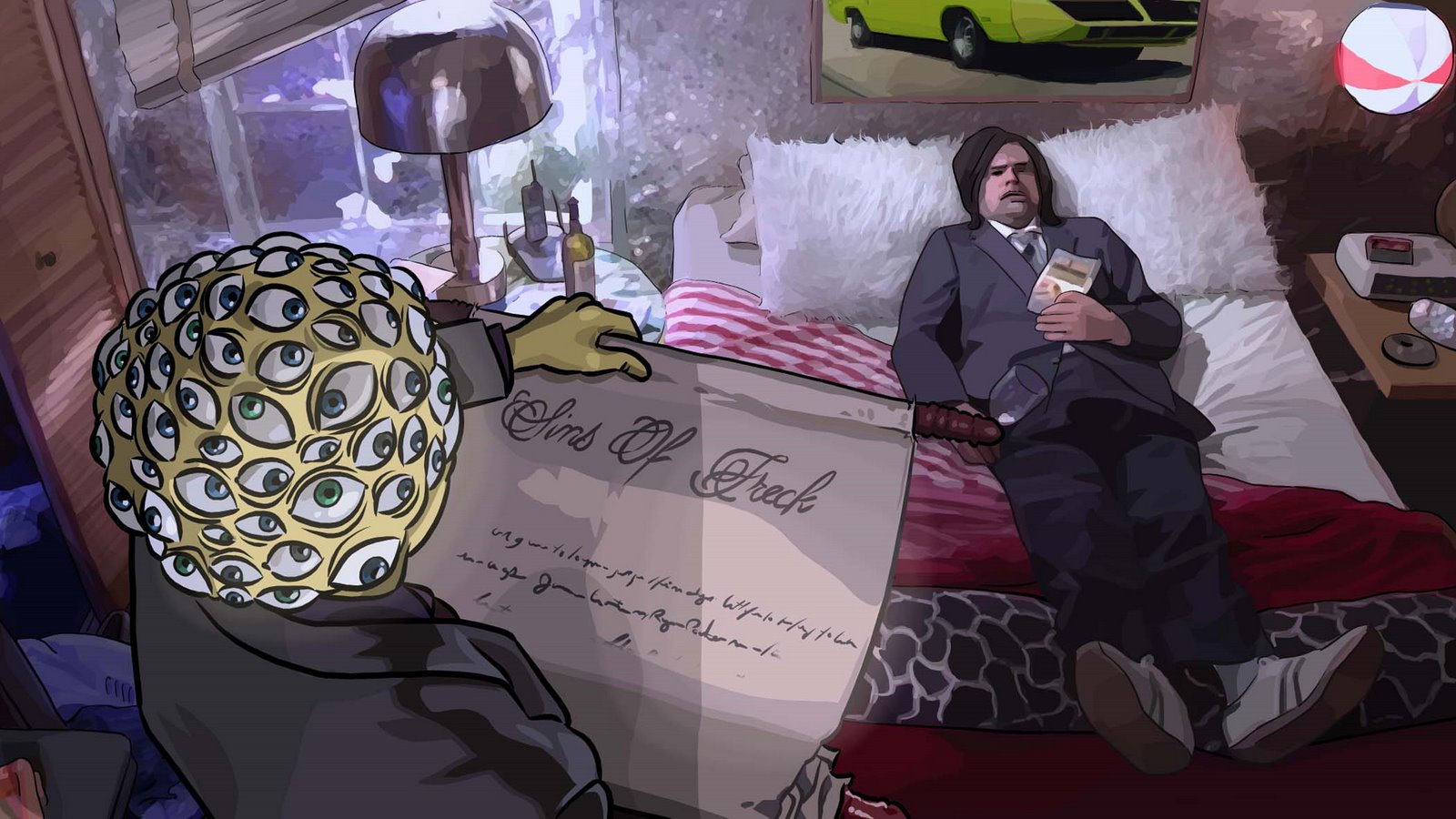
I Saw Death Rising From The Earth: A Scanner Darkly (2006)

I recently stumbled upon the madness that is cultural outpour via Nerve.com, a decidedly counterculture forum.  I particularly enjoy some of their deeper delving into insanity through experimentation with over consuming various things, whether they be legal or illegal.  However, I as a cinephile and part-time film critic was particularly intrigued, and, subsequently, enraged by their various "ranked" listings, where they take it upon themselves to put things like director's films in chronological order.  It was one particular post titled Philip K. Dick Adaptations from Worst to Best that caught my attention.  I am no scholar of Dick's work and have not seen a considerable amount of the films mentioned, however, I have attested to my love of Blade Runner and quickly assumed that it would be this film that would easily steal the number one spot on the list...this was not the case.  The folks at Nerve.com went with A Scanner Darkly, a film I was familiar with, but had only seen clips of up until that point.  I was perplexed and decidedly upset by the choice, feeling as though the perfect Blade Runner had no business in any spot but first.  However, I knew that to truly affirm this statement I would need to watch A Scanner Darkly in its entirety and really synthesize it as a film before making a definitive statement.  So upon watching it I can say this, Blade Runner is still a considerably better film, but damn if A Scanner Darkly is not a menacing, dystopic piece of cinema that is deserved of high, high praise.  I am not entirely familiar with the book on which this is based, but looked it up and discovered it to be written in 1977, which is baffling, especially since watching it now, some seven years after its filmic release, I cannot help but consider how both prescient and ahead of its time the text really was and still is, particularly in its consideration of the maddening effects of drug culture on identity, self-respect and interactions between various persons consuming such psychologically altering substances.  Of course, I am aware that some of these reactions are a result of Richard Linklater's adaptation and filming, particularly his use of rotoscoping, to give it an otherworldly feel, while still touching dangerously close to reality, in fact, if one blurs or clouds their vision during the viewing, it suddenly becomes all too real and incredibly disconcerting.  The implication are heavy in this film and its stylized nature certainly attracts viewers, the message brilliant and while again not Blade Runner, certainly exists within the higher tiers of science fiction filmmaking.


A Scanner Darkly centers on a post-drug war America that finds itself in a heavily Orwellian state, one where phone calls are traced and video recordings invade even the most intimate of actions.  However, despite these intrusive technologies, drugs, nonetheless, manage to intrude into society, via various dealers and drug circles.  One drug, in particular, Substance D proves debilatating in its psychotic alterations, leading heavy users to suffer from split brain psychosis and intense and visceral paranoia.  As such the police force for Orange County invests in methods to destroy the trafficking of the drugs, using agent Bob Arctor (Keanu Reeves) to infiltrate a high-powered Substance D ring, involving the anarchistic, yet maddeningly militaristic Barris (Robert Downey, Jr.) and his stoner-like pal Ernie Luckman (Woody Harrelson).  Perhaps the groups most troublesome individual is Charles Freck (Rory Cochrane) whose addiction to Substance D, has all but entirely destroyed his mind.  As Arctor's involvement with the group heightens, so does his burgeoning friendship with the group, particularly one with sexual implications with a come-and-go guest in the house Donna (Winona Ryder).  It is during a day at work that Arctor is informed by his superior Hank, who, like Arctor wears a "scramble suit" which is a constantly shifting identity suit that makes the identification of their creator's form so rare that it only occurs about one in every million manifestations.  Needless to say, the double duty of attempting to continue to mask his presence as Arctor while also getting "closer" to breaking up the drug ring proves far too much to handle, only worsened by his continual use of Substance D, within the confines of his work.  He begins to become the subject of tests by the police psychiatrists, only to be told that his brain has now split and is beginning to work against itself.  It is one night, after a failed attempt at romance with Donna that Arctor's insanity splits and he finds himself seeing persons present in situations they are not present, which results in him being entirely pulled of the case where he was to investigate himself.  It is during his last "talk" with Hank that he realizes his boss may well be Donna undercover, leading to the final break from sanity, leading to his being placed in rehabilitation.  It is during his rehabilitation that he is sent to a farm to aid in "growing items," which is intercut with a scene of Donna, known, out of cover as Audrey, talking with a superior about his possible memories of a drug, which will allow him to hopefully undercover the truth that the farm using addicts from Substance D, is, in fact, the same place growing and harvesting the chemical.


The film is absolutely baffling and nearly incomprehensible on first examination, after all, it is Dick's very moving text that is both a cautionary tale against drug use, as well a work created to pay homage to his friends whose lives were invariably damaged by the drugs of the era.  It is perhaps this framework that makes the narrative so complex, because Linklater's adaptation makes it clear that it neither condemns nor praises those involved in drug use.  In fact, it shows the layers of dependency and paranoia that emerge as a result of such engagements.  For example, Barris is always spouting ideas about being watched by the government and being steps away from getting narc'ed out.  This would be illogical in most film settings, but this is the entire narrative of the film, Barris is continually in contact with a friend who is essentially awaiting a moment to bust him for his use and distribution of Substance D.  Furthermore, Arctor's misery seems to stem from his concern that he is alienated from the society around him, believing that the performances he puts on are meaningless, because what results is his failure to earnestly connect with any one on an earnest level.  The irony extends itself when one considers that, as part of his job, he must wear a suit that continually alters his identity, so much so that he is never himself, but on the rarest of occasions.  Tragedy, emerges then when he does seem to have a moment of genuine connection between another person only to be denied that pleasure, when she claims to be too involved in drugs, but what proves to be the likely alternative is that she knows engaging with him could destroy the larger plan to exploit him to attack the drug producers down the line.  In fact, Arctor is even told that he is insane, leading to his questioning every action, even the moment when he does realize that Hank, is indeed Audrey/Donna he is so unstable that to question it would be to affirm his own fall into psychological instability.  The result, of all this, I would suggest is not to condemn the drug users for their eventual fall out, but instead, to critique the nature of drug trafficking, both in its indifference to those it hurts, as well as the way in which the government uses it to their advantage in one moment, only to turn their heads and condemn it in another breath.

Key Scene:  The moment when Arctor catches a glimpse of Donna in the scramble suit is so built up and delivered with such succinct certainty that it is hard not to be completely blown away by its occurrence.

The bluray is phenomenal.  Show Dick and Linklater some love and grab a copy.