I recently stumbled upon the madness that is cultural outpour via Nerve.com, a decidedly counterculture forum. I particularly enjoy some of their deeper delving into insanity through experimentation with over consuming various things, whether they be legal or illegal. However, I as a cinephile and part-time film critic was particularly intrigued, and, subsequently, enraged by their various "ranked" listings, where they take it upon themselves to put things like director's films in chronological order. It was one particular post titled Philip K. Dick Adaptations from Worst to Best that caught my attention. I am no scholar of Dick's work and have not seen a considerable amount of the films mentioned, however, I have attested to my love of Blade Runner and quickly assumed that it would be this film that would easily steal the number one spot on the list...this was not the case. The folks at Nerve.com went with A Scanner Darkly, a film I was familiar with, but had only seen clips of up until that point. I was perplexed and decidedly upset by the choice, feeling as though the perfect Blade Runner had no business in any spot but first. However, I knew that to truly affirm this statement I would need to watch A Scanner Darkly in its entirety and really synthesize it as a film before making a definitive statement. So upon watching it I can say this, Blade Runner is still a considerably better film, but damn if A Scanner Darkly is not a menacing, dystopic piece of cinema that is deserved of high, high praise. I am not entirely familiar with the book on which this is based, but looked it up and discovered it to be written in 1977, which is baffling, especially since watching it now, some seven years after its filmic release, I cannot help but consider how both prescient and ahead of its time the text really was and still is, particularly in its consideration of the maddening effects of drug culture on identity, self-respect and interactions between various persons consuming such psychologically altering substances. Of course, I am aware that some of these reactions are a result of Richard Linklater's adaptation and filming, particularly his use of rotoscoping, to give it an otherworldly feel, while still touching dangerously close to reality, in fact, if one blurs or clouds their vision during the viewing, it suddenly becomes all too real and incredibly disconcerting. The implication are heavy in this film and its stylized nature certainly attracts viewers, the message brilliant and while again not Blade Runner, certainly exists within the higher tiers of science fiction filmmaking.
A Scanner Darkly centers on a post-drug war America that finds itself in a heavily Orwellian state, one where phone calls are traced and video recordings invade even the most intimate of actions. However, despite these intrusive technologies, drugs, nonetheless, manage to intrude into society, via various dealers and drug circles. One drug, in particular, Substance D proves debilatating in its psychotic alterations, leading heavy users to suffer from split brain psychosis and intense and visceral paranoia. As such the police force for Orange County invests in methods to destroy the trafficking of the drugs, using agent Bob Arctor (Keanu Reeves) to infiltrate a high-powered Substance D ring, involving the anarchistic, yet maddeningly militaristic Barris (Robert Downey, Jr.) and his stoner-like pal Ernie Luckman (Woody Harrelson). Perhaps the groups most troublesome individual is Charles Freck (Rory Cochrane) whose addiction to Substance D, has all but entirely destroyed his mind. As Arctor's involvement with the group heightens, so does his burgeoning friendship with the group, particularly one with sexual implications with a come-and-go guest in the house Donna (Winona Ryder). It is during a day at work that Arctor is informed by his superior Hank, who, like Arctor wears a "scramble suit" which is a constantly shifting identity suit that makes the identification of their creator's form so rare that it only occurs about one in every million manifestations. Needless to say, the double duty of attempting to continue to mask his presence as Arctor while also getting "closer" to breaking up the drug ring proves far too much to handle, only worsened by his continual use of Substance D, within the confines of his work. He begins to become the subject of tests by the police psychiatrists, only to be told that his brain has now split and is beginning to work against itself. It is one night, after a failed attempt at romance with Donna that Arctor's insanity splits and he finds himself seeing persons present in situations they are not present, which results in him being entirely pulled of the case where he was to investigate himself. It is during his last "talk" with Hank that he realizes his boss may well be Donna undercover, leading to the final break from sanity, leading to his being placed in rehabilitation. It is during his rehabilitation that he is sent to a farm to aid in "growing items," which is intercut with a scene of Donna, known, out of cover as Audrey, talking with a superior about his possible memories of a drug, which will allow him to hopefully undercover the truth that the farm using addicts from Substance D, is, in fact, the same place growing and harvesting the chemical.
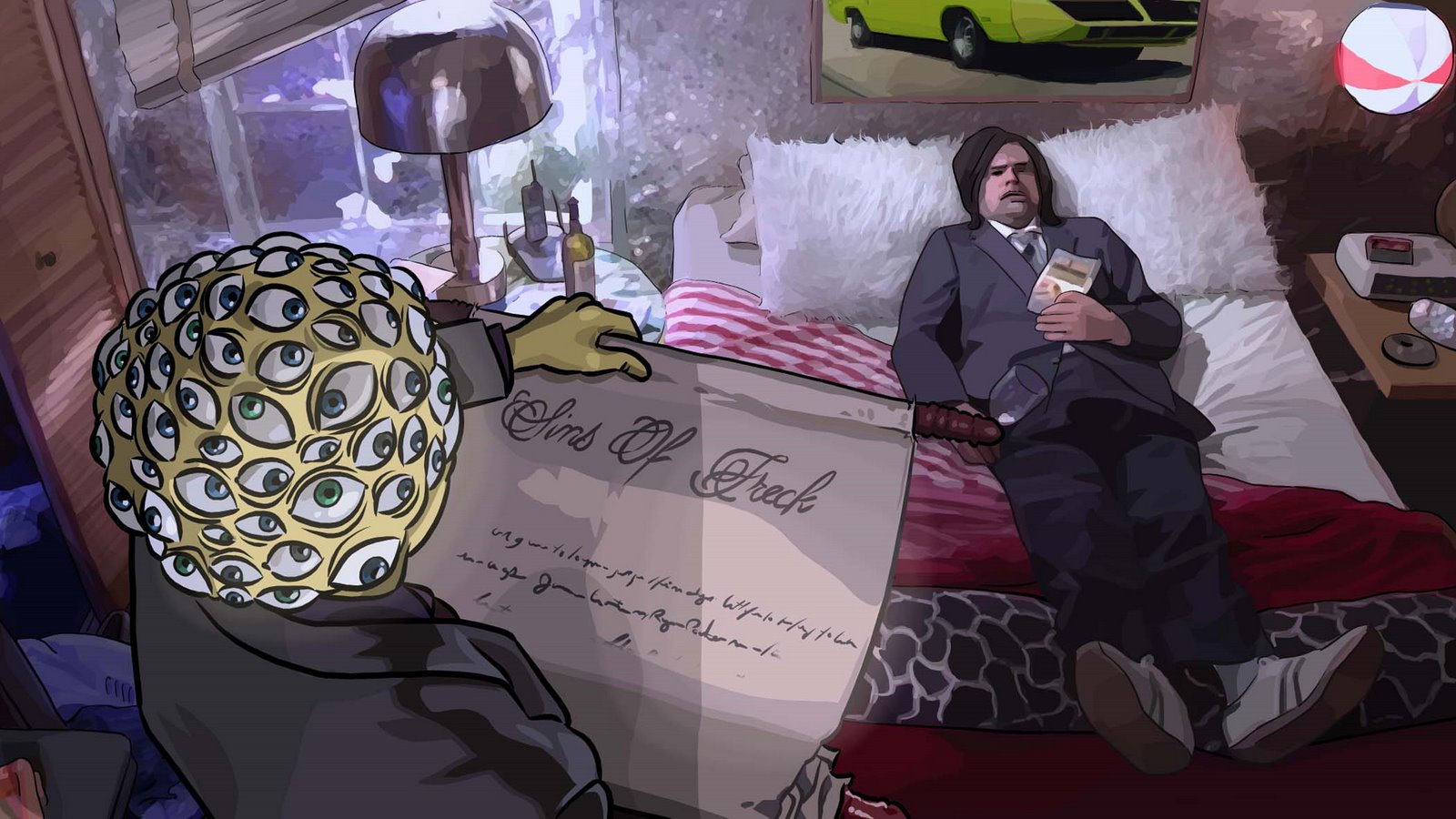
The film is absolutely baffling and nearly incomprehensible on first examination, after all, it is Dick's very moving text that is both a cautionary tale against drug use, as well a work created to pay homage to his friends whose lives were invariably damaged by the drugs of the era. It is perhaps this framework that makes the narrative so complex, because Linklater's adaptation makes it clear that it neither condemns nor praises those involved in drug use. In fact, it shows the layers of dependency and paranoia that emerge as a result of such engagements. For example, Barris is always spouting ideas about being watched by the government and being steps away from getting narc'ed out. This would be illogical in most film settings, but this is the entire narrative of the film, Barris is continually in contact with a friend who is essentially awaiting a moment to bust him for his use and distribution of Substance D. Furthermore, Arctor's misery seems to stem from his concern that he is alienated from the society around him, believing that the performances he puts on are meaningless, because what results is his failure to earnestly connect with any one on an earnest level. The irony extends itself when one considers that, as part of his job, he must wear a suit that continually alters his identity, so much so that he is never himself, but on the rarest of occasions. Tragedy, emerges then when he does seem to have a moment of genuine connection between another person only to be denied that pleasure, when she claims to be too involved in drugs, but what proves to be the likely alternative is that she knows engaging with him could destroy the larger plan to exploit him to attack the drug producers down the line. In fact, Arctor is even told that he is insane, leading to his questioning every action, even the moment when he does realize that Hank, is indeed Audrey/Donna he is so unstable that to question it would be to affirm his own fall into psychological instability. The result, of all this, I would suggest is not to condemn the drug users for their eventual fall out, but instead, to critique the nature of drug trafficking, both in its indifference to those it hurts, as well as the way in which the government uses it to their advantage in one moment, only to turn their heads and condemn it in another breath.
Key Scene: The moment when Arctor catches a glimpse of Donna in the scramble suit is so built up and delivered with such succinct certainty that it is hard not to be completely blown away by its occurrence.
The bluray is phenomenal. Show Dick and Linklater some love and grab a copy.
Showing posts with label Richard Linklater. Show all posts
19.1.13
We Must Always Be On Guard For The Mischievous Lip Drift: Bernie (2012)
I can only describe Bernie as one very specific thing and I realize how obscure it sounds even as I elaborate, but to me, one could only define this absurdist masterpiece as a Louvin Brothers song that has been put to film in an homage to the mockumentary stylings of Christopher Guest, while clearly taking heavy influence from the underlying social tensions of American Psycho. Seriously, that is exactly what I felt while watching this film, which technically came out in 2011, but has not seen wide release until the past year or so, making it a contender during awards season, as well as proving to be one of the most overlooked works of the last year, in a very literal sense, considering that people did not simply watch it and dismiss it, but actually completely avoided it all together. I am fully aware that he film contains two of the most off-putting actors in Hollywood, in Jack Black and Matthew McConaughey, but both are doing some excellent work in this film, particularly Black who goes against his garrulous and bombastic traditional role, for something much more reserved, but equally grandiose in its spectacle. It is great to see Richard Linklater back in the game providing viewers with some really great work, quite reminiscent of his early films, Slacker in particular, wherein a society is clearly in a state of crumbling disillusion but can only manage to deal with such issues by either condemning those around them or living vicariously through those doing far better than themselves. It is clear from the onset that viewers are to take Bernie lightly, the title cards intercut throughout the film, along with the incorporation of interviews by the townspeople manage to undermine any sort of legitimate commentary on the nature of deception and psychological breakdown, but as Linklater reminds viewers, on more than one occasion throughout the film, as much as one may mock the characters within the film, at the end of the day they are truly based off of real individuals making the humor become far less laughable and incredibly real, much like The Informant!, but with an even higher degree of scathing social criticism, directed wholly at the "heart of America."
Bernie, centers on the title character, played by Jack Black, who is a flamboyant, but well loved assistant funeral director in the small Texas town of Carthege. While everyone is rather certain on the homosexuality of Bernie they do seem intent on claiming him to be one of the most standup guys they have ever met, and find him to be a true gift to the elderly community, particularly the older women who welcome his hospitality in a time of great sadness. Bernie, in fact, takes a particular liking to one of the older women in the community, Marjorie Nugent (Shirley MacLaine) who is initially dismissive to the awkward advances of Bernie, but comes around after a few visits, realizing that he is indeed the only nice person in the entire town, never mind that Marjorie made a reputation as an incredibly mean individual turning down those who requested loans at the bank she ran in place of her late husband. Things boil over for Bernie, when, after quitting his job at the funeral home and becoming solely dependent on Marjorie, he realizes that she is only using him as a chauffeur, caretaker and general servant with little care for his happiness, going so far as to openly chastise him for spending too much time with his two hobbies: flying and musical theater. During one day at Marjorie's house, Bernie becomes incapable of starring at the old woman over-chewing her food any longer and shots her with a hunting rifle and subsequently stuffing her in a meat freezer. The town goes on assuming that Marjorie is simply suffering from a bad stroke, yet when Marjorie's stock broker expects fowl play on the part of Bernie he manages to obtain a search warrant, where in they discover her body. At this point Danny Buck Davidson (Matthew McConaughey) a Texas district attorney enters the picture with hopes of prosecuting the murder, yet when he realizes that even after Bernie openly admits to the crime, the townspeople still believe him to be innocent, leading to Danny moving the trial to another county, a rare occurrence, especially since the notion of a "fair trial" would hinder Bernie. Within his new trial Bernie is found guilty and sent to jail, where he continues to receive visits from the people of Carthege who presume him innocent.
This movie is a scathing film, although its lightheartedness and concern for the opinions of the common person would lead many a viewer to assume otherwise. Linklater, however, manages to even trick viewers into believing Bernie to be an incredibly likable guy. In constructing the narrative in such a way the film causes one to consider what effect community involvement and outreach play into the judgement of a character. Sure Bernie is a great role model within the church and goes out of his way to spend money on those less fortunate than himself, but the narrative constantly sneaks in reminders that he is not an entirely functional person and certainly exploits others when the situation proves beneficial, whether it be the sale of coffins, or the use of an aging woman's money to engage in lavish world travels. Bernie's dandy veneer is always to be questioned, yet Linklater's incorporation of praiseful words by the townspeople make that difficult to do, not to mention how likable Black makes Bernie seem, nonetheless, he is quite capable of murder and deceit and certainly has no problem using devious tactics throughout the film. Secondly, the film questions the notion of a "good and wholesome" middle America, one where nothing bad can happen and when it does it is clearly the result of muckraking by outside forces, in this case the folks of Carthege believe Danny Buck Davidson to be using his political aspirations to destroy a stand-up guy like Bernie, and while this may have a degree of validity, it is clear that Danny really does realize how disillusioned everyone in the town has become in relation to the town hero. It is no accident that it is only through creating a cultural/social difference between Bernie and the common folk in the trial that Danny is able to secure a guilty verdict, by a simple question of what wine pairs best with fish. The townspeople point to this moment in the trial as an assured moment of his demise, it made him certifiably different and therefore capable of fault. Linklater seems to suggest that as long as an individual can obtain insider status within the "heart of America" they can get away with anything...even murder. However, one cannot forget that Linklater is merely adapting a very real story, one that causes me to consider my understanding of human nature far more than I imagined I would upon initially viewings this superb dark satire.
Key Scene: I laughed the entire time Jack Black sang "Love Lifted Me" in his car, and proceeded to laugh through the rest of the film, but his opening moment is so ridiculous that it is hard not to become entirely occupied in the narrative unfolding.
Another gem watchable on Netflix, do yourself a favor and watch this film, I can only assume that you will want to pass it along as did I, because it is in need of as many fans as possible.
Bernie, centers on the title character, played by Jack Black, who is a flamboyant, but well loved assistant funeral director in the small Texas town of Carthege. While everyone is rather certain on the homosexuality of Bernie they do seem intent on claiming him to be one of the most standup guys they have ever met, and find him to be a true gift to the elderly community, particularly the older women who welcome his hospitality in a time of great sadness. Bernie, in fact, takes a particular liking to one of the older women in the community, Marjorie Nugent (Shirley MacLaine) who is initially dismissive to the awkward advances of Bernie, but comes around after a few visits, realizing that he is indeed the only nice person in the entire town, never mind that Marjorie made a reputation as an incredibly mean individual turning down those who requested loans at the bank she ran in place of her late husband. Things boil over for Bernie, when, after quitting his job at the funeral home and becoming solely dependent on Marjorie, he realizes that she is only using him as a chauffeur, caretaker and general servant with little care for his happiness, going so far as to openly chastise him for spending too much time with his two hobbies: flying and musical theater. During one day at Marjorie's house, Bernie becomes incapable of starring at the old woman over-chewing her food any longer and shots her with a hunting rifle and subsequently stuffing her in a meat freezer. The town goes on assuming that Marjorie is simply suffering from a bad stroke, yet when Marjorie's stock broker expects fowl play on the part of Bernie he manages to obtain a search warrant, where in they discover her body. At this point Danny Buck Davidson (Matthew McConaughey) a Texas district attorney enters the picture with hopes of prosecuting the murder, yet when he realizes that even after Bernie openly admits to the crime, the townspeople still believe him to be innocent, leading to Danny moving the trial to another county, a rare occurrence, especially since the notion of a "fair trial" would hinder Bernie. Within his new trial Bernie is found guilty and sent to jail, where he continues to receive visits from the people of Carthege who presume him innocent.
This movie is a scathing film, although its lightheartedness and concern for the opinions of the common person would lead many a viewer to assume otherwise. Linklater, however, manages to even trick viewers into believing Bernie to be an incredibly likable guy. In constructing the narrative in such a way the film causes one to consider what effect community involvement and outreach play into the judgement of a character. Sure Bernie is a great role model within the church and goes out of his way to spend money on those less fortunate than himself, but the narrative constantly sneaks in reminders that he is not an entirely functional person and certainly exploits others when the situation proves beneficial, whether it be the sale of coffins, or the use of an aging woman's money to engage in lavish world travels. Bernie's dandy veneer is always to be questioned, yet Linklater's incorporation of praiseful words by the townspeople make that difficult to do, not to mention how likable Black makes Bernie seem, nonetheless, he is quite capable of murder and deceit and certainly has no problem using devious tactics throughout the film. Secondly, the film questions the notion of a "good and wholesome" middle America, one where nothing bad can happen and when it does it is clearly the result of muckraking by outside forces, in this case the folks of Carthege believe Danny Buck Davidson to be using his political aspirations to destroy a stand-up guy like Bernie, and while this may have a degree of validity, it is clear that Danny really does realize how disillusioned everyone in the town has become in relation to the town hero. It is no accident that it is only through creating a cultural/social difference between Bernie and the common folk in the trial that Danny is able to secure a guilty verdict, by a simple question of what wine pairs best with fish. The townspeople point to this moment in the trial as an assured moment of his demise, it made him certifiably different and therefore capable of fault. Linklater seems to suggest that as long as an individual can obtain insider status within the "heart of America" they can get away with anything...even murder. However, one cannot forget that Linklater is merely adapting a very real story, one that causes me to consider my understanding of human nature far more than I imagined I would upon initially viewings this superb dark satire.Key Scene: I laughed the entire time Jack Black sang "Love Lifted Me" in his car, and proceeded to laugh through the rest of the film, but his opening moment is so ridiculous that it is hard not to become entirely occupied in the narrative unfolding.
Another gem watchable on Netflix, do yourself a favor and watch this film, I can only assume that you will want to pass it along as did I, because it is in need of as many fans as possible.
26.3.12
I Like To Feel His Eyes On Me When I Look Away: Before Sunrise (1995)
Minimalist narrative cinema seems to be a thing long gone from contemporary filmmaking. Sure you get a film like The Trip, from which I just returned from viewing, that relies on the discussion over the style or non-language elements of the film. However, there was a time in the nineties when directors felt it necessary to focus on people simply engaging in conversations. Noah Baumbach, Jim Jarmusch and many others approached this format with much success and praise, however, it was quite clear that nobody performed the conversation film with as much poise and grace as Richard Linklater and his 1995 work Before Sunrise certainly proves this. While it initially seems like a dry conversation piece set abroad for affect, it becomes clear quite quickly that the film offers much more in the way of tapping into some universal truth about love, lust, and friendship. It also questions the length necessary for two individuals to build such a relationship and to what extent such an amount of time has on the validity of their experiences. Tacky romantic comedies fail to build a believability and approachability even remotely close to what Linklater offers within Before Sunrise, because between his constantly precise directing and the excellent acting of the lead roles, each pause, quick glance and whispered line makes the film incredibly intimate and unabashedly sentimental. I would be hard pressed to find a romantic film from the nineties that I would enjoy more.
Before Sunrise, as noted earlier, focuses on two people who, while riding on a train, suddenly find each other to be soulmates of sorts and vow to spend an entire night together in Vienna and part in the morning to go their separate ways. The man is Jesse (Ethan Hawke) an American in his late twenties who clearly has a rebellious past from which he clearly wishes to be distanced. His love interest is the French woman Celine (Julie Delpy) who clearly enjoys throwing caution to the wind, while also asserting her own power as an independent woman. The two appear to be somewhat opposite in their life goals, Jesse clearly concerns himself with scraping by and drifting, while Celine desires to excel and make notable differences in the world. One could call Jesse a young soul and Celine an old. The two debate various things through the night while running into a variety of Viennese people, all with their own stories and existences. The two continue through the night eventually obtaining a bottle of wine, which they use to enjoy a night in the park. At first, Celine is reluctant to sleep with Jesse, because she fears that he is merely attempting to fulfill a male fantasy of the foreign one night stand, but as they continue to talk it becomes clear that he cares deeply for her and desires her genuinely. As the sunrises the two part ways at the train station agreeing to meet again at the same place in 6 months, however, the film closes with all the locations in which they spent the evening empty, suggesting that the second meeting never occurs (although there is a sequel).
Minimalist narrative can be awful and when done incorrectly, a handful of contemporary indie films show this to great extent. As such, it is important to discuss what proves a successful recipe for a good narrative only film. First and foremost, believable characters make minimalist films work. If the characters are too entwined to the directors personal life it is hard for casual viewers to relate, this is not the case with Before Sunrise. Even knowing Ethan Hawke as a relatively popular actor, his character, as well as that of Celine seem somehow possible, and despite the story seeming incredibly unlikely, Before Sunrise for whatever reason seems plausible. We as viewers want this story to work. Another factor is the topics of discussion within the film, they must be varied. Bad narratives falter from focusing too heavily on one subject, from my experience usually music or literature. Before Sunrise covers many topics: from fratricidal spiders, to women's liberation, to world politics. The insights are multifaceted and surprisingly unbiased. Finally, and most importantly, the film has to have the one perfect scene. In Wes Anderson's Bottle Rocket, it is the scene at the end in which Owen Wilson's character belts out "They can't get me...I'm fucking innocent," in Jim Jarmusch's Down By Law...it is the entire movie. As for Before Sunrise, it is without argument the pinball scene. Delpy and Hawke deliver it so perfectly in synch that it is really hard to believe that you are indeed watching a film. Before Sunrise covers all these tenants, and many more, making it a masterpiece of minimalist narrative.
Before Sunrise is an excellent film and a staple of nineties romance. Purchase a copy of this film if you enjoy American indie films or the work of Linklater, but at the very least rent this film.
Before Sunrise, as noted earlier, focuses on two people who, while riding on a train, suddenly find each other to be soulmates of sorts and vow to spend an entire night together in Vienna and part in the morning to go their separate ways. The man is Jesse (Ethan Hawke) an American in his late twenties who clearly has a rebellious past from which he clearly wishes to be distanced. His love interest is the French woman Celine (Julie Delpy) who clearly enjoys throwing caution to the wind, while also asserting her own power as an independent woman. The two appear to be somewhat opposite in their life goals, Jesse clearly concerns himself with scraping by and drifting, while Celine desires to excel and make notable differences in the world. One could call Jesse a young soul and Celine an old. The two debate various things through the night while running into a variety of Viennese people, all with their own stories and existences. The two continue through the night eventually obtaining a bottle of wine, which they use to enjoy a night in the park. At first, Celine is reluctant to sleep with Jesse, because she fears that he is merely attempting to fulfill a male fantasy of the foreign one night stand, but as they continue to talk it becomes clear that he cares deeply for her and desires her genuinely. As the sunrises the two part ways at the train station agreeing to meet again at the same place in 6 months, however, the film closes with all the locations in which they spent the evening empty, suggesting that the second meeting never occurs (although there is a sequel).
Minimalist narrative can be awful and when done incorrectly, a handful of contemporary indie films show this to great extent. As such, it is important to discuss what proves a successful recipe for a good narrative only film. First and foremost, believable characters make minimalist films work. If the characters are too entwined to the directors personal life it is hard for casual viewers to relate, this is not the case with Before Sunrise. Even knowing Ethan Hawke as a relatively popular actor, his character, as well as that of Celine seem somehow possible, and despite the story seeming incredibly unlikely, Before Sunrise for whatever reason seems plausible. We as viewers want this story to work. Another factor is the topics of discussion within the film, they must be varied. Bad narratives falter from focusing too heavily on one subject, from my experience usually music or literature. Before Sunrise covers many topics: from fratricidal spiders, to women's liberation, to world politics. The insights are multifaceted and surprisingly unbiased. Finally, and most importantly, the film has to have the one perfect scene. In Wes Anderson's Bottle Rocket, it is the scene at the end in which Owen Wilson's character belts out "They can't get me...I'm fucking innocent," in Jim Jarmusch's Down By Law...it is the entire movie. As for Before Sunrise, it is without argument the pinball scene. Delpy and Hawke deliver it so perfectly in synch that it is really hard to believe that you are indeed watching a film. Before Sunrise covers all these tenants, and many more, making it a masterpiece of minimalist narrative.
Before Sunrise is an excellent film and a staple of nineties romance. Purchase a copy of this film if you enjoy American indie films or the work of Linklater, but at the very least rent this film.
Subscribe to:
Posts (Atom)


